
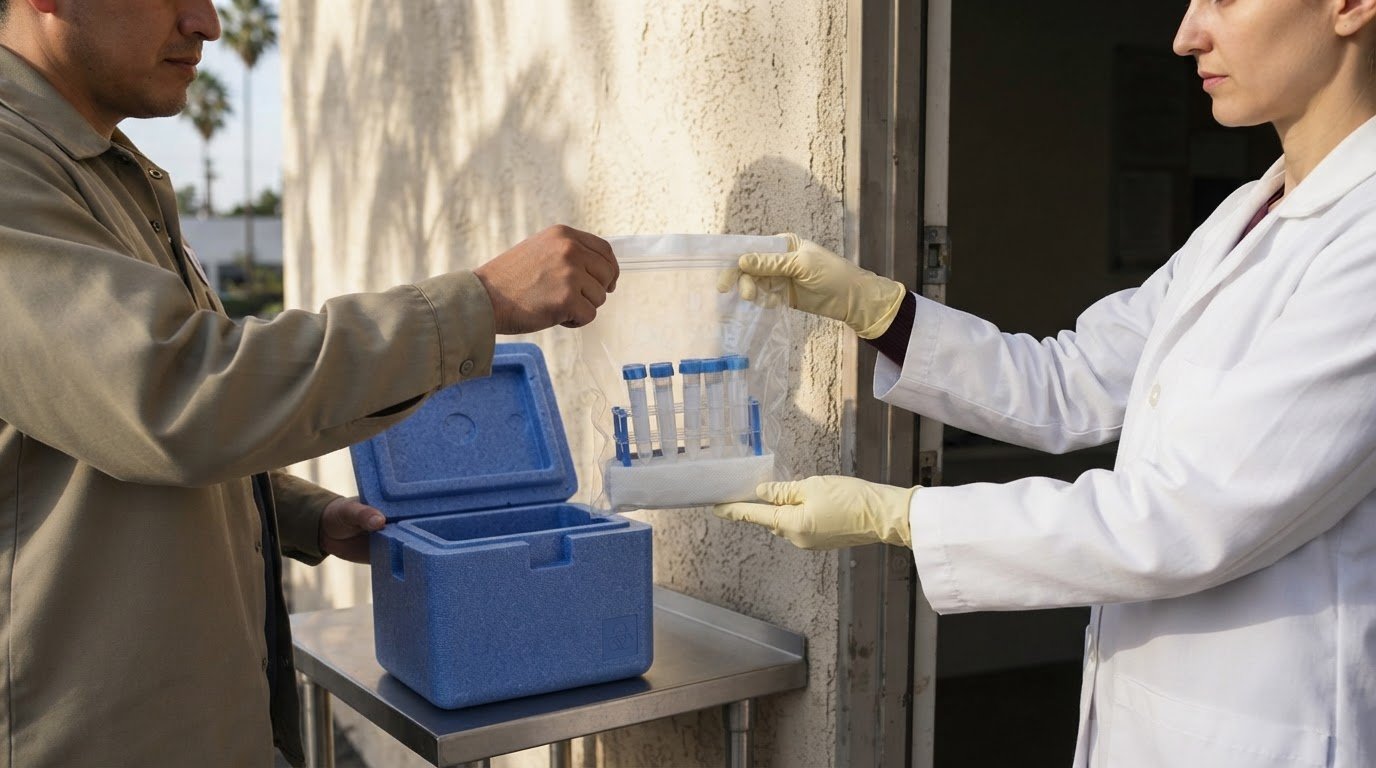
STAT Medical Delivery in Los Angeles: Urgency and Custody
A five-minute delay in a medical delivery can affect a patient. STAT Medical Delivery is for a shipment that needs immediate priority handling rather than routine routing, with urgency carried from pickup through handoff. Chain-of-custody records and proof of delivery help document who handled the item, when it moved, and when it reached its destination.
When a medical shipment is time-sensitive, speed matters, but so does a clear record of its journey. In Los Angeles, the route, item, handling requirements, and recipient handoff all shape how an urgent delivery is managed. This article explains what makes a shipment STAT, how custody documentation and delivery proof support accountability, and what to consider when arranging a medical courier. You’ll learn how urgent medical deliveries move from pickup to receipt, and where routine delivery ends and immediate priority begins.
Key Takeaways
- Distinguish a STAT request from routine delivery by the shipment’s urgency and the handling it requires.
- Keep pickup and receipt details clear so the shipment’s handoff can be followed from origin to destination.
- Understand how a courier’s location, vehicle, and shipment requirements shape driver assignment.
- Match the delivery plan to the item, recipient, route, and urgency instead of relying on a one-size-fits-all process.
- Plan medical logistics around safe handling, privacy, and a clear recipient handoff.
Chain of custody and proof of delivery
Medical delivery custody records
For a STAT Medical Delivery, chain of custody is the documented sequence of handoffs from pickup to receipt. It connects the shipment to its movement rather than relying on a verbal update. At pickup, a medical courier may record the specimen’s identity, pickup date and time, and observed appearance, then place it in an appropriate container. These details establish an initial record for the healthcare facility and recipient.
A documented pickup makes the first custody transfer specific. The person releasing the item and the courier can identify what is being handed over, when the transfer occurs, and its visible condition. For example, the record might describe a labeled specimen container and note its appearance at collection. This helps distinguish the shipment from other packages on the same clinical logistics route.
- Identify the shipment: Record the specimen’s identity as available to the pickup team.
- Record the pickup: Note the pickup date and time and the item’s appearance.
- Prepare for transport: Place the shipment in an appropriate container.
- Document receipt: Record arrival time and the shipment’s physical state when received.
At delivery, the receiving record documents the final handoff. A medical courier may note the arrival time and the shipment’s physical condition when received. If a hospital accepts a specimen in visibly different condition, that observation can be recorded at receipt rather than left to memory. The pickup and arrival entries give the facility two points to compare during follow-up.
Organ transport also requires a clear handoff in a time-critical clinical setting. The shipment’s identity, pickup time, and observed appearance establish the initial record. At the receiving operating room, the arrival time and physical condition provide the next documented point. A named recipient or receiving unit can help trace the handoff internally, in line with facility procedures. Keep the transport record aligned with each actual custody transfer.
Proof of delivery and chain-of-custody documentation serve related, distinct purposes. Proof of delivery shows that a shipment reached its destination; custody documentation traces its handling between pickup and receipt. A delivery timestamp alone cannot describe every handoff. Likewise, a pickup record without a receipt entry leaves the final transfer undocumented. For specimens, medications, or an organ shipment, keep both records connected to the same shipment identifier.
Clear records support follow-up when healthcare facilities face high demand or have a question about a delivery. Staff can compare pickup details with the receiving entry, identify the handoff point, and review the recorded condition. Use the facility’s established documentation process, making each entry at the relevant step. In urgent transport, consistent records keep custody details and proof of receipt together without slowing the handoff.
Definition and urgency of STAT medical delivery
A STAT request places a medical delivery at immediate priority because its timing matters to patient care. It differs from a scheduled route, which follows planned stops and delivery windows. The urgency is practical: delivering a medical product five minutes late can affect a patient. The label alone does not explain the shipment’s needs, so dispatch and the facility must communicate the item, destination, urgency, and handling instructions clearly.
Urgent blood sample delivery illustrates why timing and destination shape the route. A sample collected at a clinic may need transport to a laboratory for testing. The medical courier needs the pickup location, receiving laboratory, and handling instructions for that shipment. If the laboratory’s workflow depends on prompt receipt, a scheduled route may not fit. Immediate dispatch instead prioritizes movement toward the named destination.
Blood products require careful coordination between the sending facility and receiving team. Before pickup, identify the product, destination, and facility handling instructions. Temperature-sensitive shipments require a transport plan that follows those instructions; do not assume every medical item has identical requirements. A dedicated route can reduce competing stops, while direct communication helps the recipient prepare for arrival. The courier carries out the agreed transport plan, not clinical decisions about the product.
STAT service does not have one universal response-time definition across providers. A medical courier provider might define STAT service as promising pickup within 30 minutes. Some STAT delivery services can deliver medical packages in as little as one hour. These are examples of service definitions and capabilities, not a single standard for every shipment. Route distance, pickup readiness, destination access, traffic, and handling needs all affect the delivery plan.
- State the urgency: Say why the shipment needs immediate priority.
- Name the item: Identify whether it is a blood sample, blood product, medication, or other supply.
- Give both locations: Provide the pickup point and receiving destination.
- Share handling instructions: Communicate the facility’s directions before transport begins.
- Prepare the receiver: Coordinate a handoff so the destination can accept the shipment.
Tracking can help facilities follow shipment progress and anticipate delays, where the STaT medical delivery service provides it. For urgent medical transport in Los Angeles, clear pickup details and a ready recipient help reduce avoidable pauses. A facility arranging a time-sensitive route can review Los Angeles courier support as a practical next step.
That consequence makes clear why the request should be treated as a coordinated handoff, not only as a label on a package: delivering a medical product 5 minutes late can affect a patient. The sender can make the urgency actionable by confirming the item, pickup point, receiving destination, and handling directions before dispatch, then ensuring the receiving team is ready to accept it.
If anything changes before pickup or while the shipment is moving, promptly notify the courier and destination. Keep the transport plan aligned with the facility’s instructions, and use available tracking to monitor progress. Clear details help the courier carry out the requested priority without making clinical decisions.
Medical courier
A medical courier connects a healthcare facility’s pickup point with the destination that needs the shipment. For a STAT request, dispatch may assign a driver based on location, vehicle, and shipment-handling requirements. These factors help match the courier to the route and item. A blood sample headed to a laboratory, for example, may require different instructions from medical supplies going to a hospital unit.
Give dispatch the details needed to plan the delivery: the shipment, pickup location, receiving destination, urgency, and handling instructions. Include access details for both locations, such as the correct entrance or receiving department. In Los Angeles, clear addresses and handoff directions help the driver navigate between busy medical facilities. If the receiving team needs to meet the courier, specify that before pickup.
STAT Medical courier drivers generally need Bloodborne Pathogen Training. That training relates to the occupational risks involved in handling potentially infectious materials. The shipment still needs clear packaging and handling instructions from the sending facility. A courier should follow those instructions during transport, rather than make clinical decisions about the specimen or supply. The facility remains responsible for communicating what the item is and how it must be handled.
- Before dispatch: Share the item type, pickup and destination details, urgency, and handling directions.
- At pickup: Have the shipment ready and identify the person releasing it.
- During transit: Keep dispatch informed of route issues that could affect the handoff.
- At receipt: Direct the courier to the intended department or recipient.
Healthcare facilities can prepare for urgent requests in advance. A STAT-capable courier arrangement can set expectations for dispatch and service. Preparation may include a Business Associate Agreement and a current certificate of insurance. Staff can also document who may request urgent transport and which internal team receives each shipment. A clear process reduces delays caused by searching for approval or locating the recipient.
Privacy matters when delivery information includes sensitive patient details. According to the U.S. Department of Health and Human Services, medical courier services handling sensitive patient information in the United States must adhere to HIPAA. Share only the information needed to identify and route the shipment. For example, a dispatch instruction can identify the receiving laboratory and specimen handling needs without placing unnecessary patient details on external paperwork.
For a STAT medical courier request, focus on readiness and communication: give dispatch complete route information, make the shipment available, and prepare the receiving team. These steps help the courier follow the facility’s instructions and move the package toward its clinical destination without avoidable confusion.
Delivery services
Urgent medical delivery can move different items through distinct healthcare routes. An organ may travel to an operating room for a transplant. A blood sample may go from a collection site to a laboratory. Critical medication may be delivered to a patient. Each shipment has a specific recipient and purpose, so dispatch needs the item type, pickup point, destination, and urgency before setting the route.
A STAT delivery team may assess urgency and select a suitable route. The assessment can account for the destination, pickup readiness, and handling needs. A laboratory specimen may require different arrangements from a package of medical supplies going to a hospital. In Los Angeles, dispatch planning should account for the actual pickup and receiving locations, not just the general area.
- Confirm the shipment: Identify the item and its intended recipient.
- Set the priority: Communicate why standard processing is unsuitable.
- Plan the route: Match the pickup, destination, and handling needs.
- Prepare the handoff: Coordinate the receiving team before arrival.
STAT delivery services prioritize urgent packages rather than placing them behind routine deliveries. The sending facility should clearly identify the request as urgent and have the package ready for collection. Complete dispatch instructions give the courier a defined destination and recipient, reducing avoidable pauses at pickup or arrival.
Some services may allocate exclusive transportation resources, including specialized courier vehicles, for urgent shipments. On the way to a STAT medical pickup and delivery, the driver is described as making no intermediate stops. These measures focus the transport on the urgent request. The vehicle and handling plan still need to match the shipment’s requirements, such as the instructions provided for a sensitive medical package.
As the shipment nears its destination, a STAT service may prepare for immediate handoff, with couriers waiting on standby. That coordination matters when a hospital team or laboratory needs to receive the package directly. The receiving department can prepare an authorized person and a clear handoff point. This reduces confusion at arrival, especially when a facility has separate entrances for patients, deliveries, and clinical departments.
Real-time tracking can help dispatch monitor progress and respond to potential delays or route changes. It supports logistics but does not replace communication between dispatch, the courier, and the receiving facility. If an entrance changes or the recipient moves to another department, a prompt update can direct the final handoff to the right place.
Plan each delivery around the shipment’s purpose, handling instructions, route, and recipient. These details distinguish an urgent delivery from routine service and give the receiving team a practical handoff plan.
Medical logistics
Medical logistics connects dispatch, shipment preparation, transport, and receipt into one coordinated process. For a STAT request, facilities can identify the clinical priority, confirm the receiving department, and make the package ready before dispatch. This matters because some laboratory tests are designed for processing within 24 hours or by early the following morning after collection. A delay can affect whether the specimen arrives within the intended testing workflow.
Response expectations should be defined before urgent demand occurs. A medical courier provider might define STAT service as promising pickup within 30 minutes. Driver assignment may happen in minutes rather than waiting for a driver to finish a scheduled stop. Facilities can compare actual emergency response times with the contracted service-level agreement quarterly. That review helps identify gaps between agreed response expectations and real dispatch performance.
- Set the request process: Define who can authorize urgent transport and how dispatch receives requests.
- Prepare shipment details: Provide pickup, destination, item type, and handling instructions.
- Coordinate the handoff: Name the receiving department and prepare its staff for arrival.
- Review performance: Compare emergency response times with the service-level agreement quarterly.
Preparation also includes staff competence and shipment safety. Personnel involved in STAT delivery should have proper training and, where required, certifications for handling and transporting medical specimens and supplies. Biological materials require appropriate packaging and handling. The U.S. Department of Transportation and Occupational Safety and Health Administration establish applicable requirements. Facilities should align package preparation and courier instructions with the shipment’s characteristics.
Technology can support logistics without replacing clear dispatch procedures. Artificial intelligence may help improve route planning, delivery-time prediction, and dynamic rerouting around delays. Real-time route changes are useful only when dispatch can communicate updates to the courier and destination. Blockchain technology may also support shipment security, tracking, and transparency. These tools relate to record continuity, but facilities still need an agreed process for pickup and receipt.
Emerging delivery methods may address specific transport challenges. Drone platforms may be used to reach remote or difficult terrain with medical supplies. For an urban Los Angeles route, the operational questions remain practical: where the item is collected, who receives it, what handling it needs, and which route best serves its urgency. The delivery method must fit the shipment and the receiving workflow.
Build the logistics plan around the item, route, recipient, and service agreement. For local medical transport needs, arrange a medical courier delivery with the pickup and destination details ready.
That same operational discipline applies across routine routes as well as urgent trips. Medical courier services must comply with applicable transportation safety regulations and use vehicles and handling procedures that meet required safety standards. Delayed deliveries can also affect the people waiting to use them: around 90% of nurses cannot perform efficiently when medical deliveries are delayed. Facilities can reduce avoidable disruption by keeping dispatch, clinical teams, and couriers aligned on readiness and receipt, while making safety checks part of each handoff. A dependable process supports continuity from collection to delivery, including when transport conditions or destination needs change.
Ways Messenger: courier service in los angeles
Ways Messenger provides medical courier services in Los Angeles, including transport of medical specimens and lab samples. Before arranging a pickup, confirm the shipment type, packaging, temperature conditions, and handling procedures directly with Ways Messenger. Share the pickup details, receiving address, and required handoff information so the delivery request has a clear route and purpose.
For shipments that need delivery within the same day, Ways Messenger also offers Same Day Courier Service. Its Courier Delivery Service and Messenger Service Los Angeles provide additional local options for moving items between locations. Choose the service that fits the timing and route your shipment requires.
For local courier support, contact Ways Messenger to discuss your delivery needs.
Prepare your next STAT medical delivery
Use this guidance to make the next urgent transport decision with a clear operational purpose. Consider how the shipment fits your facility’s workflow and what the receiving team needs to complete its part. A defined plan helps staff act decisively when timing matters.
Choose STAT Medical Delivery when immediate priority is appropriate for the shipment. Ways Messenger provides courier service in Los Angeles for local delivery needs. Share the route and request details to discuss the right next step for your delivery.
Contact Ways Messenger about delivery. A thoughtful plan can help your team approach the next request with confidence.